
Bookkeepers Near Abilene AlternativeThe books close for owners in Abilene
Your QuickBooks file is behind and you are not sure how far. A look at the file is free, and nothing moves until you approve the scope. Then we close each month and tie it to the bank. Steven Palmieri does the look, in the role owners call the Tax CFO and the Entrepreneur's CFO.
Open the form
How far behind the bank
Name the month that is still open. We will tell you what a look at the file would cover.

You will be talking to the Steven Palmieri practice.
From Steven Palmieri
The bank stopped agreeing, and the months can stay shut.
A bookkeeper catches the file up and hands it back. The Tax CFO catches it up and keeps it closed, so the return is built on months you trust and the next quarter's decisions are made from real numbers. One counts what happened. The other decides what happens next.
Read the file
One close for both sides
The old Texas and Pacific line still splits downtown from SoDA. Every Texan knows a town cut by the tracks. We are all Texans, and we still want one set of books for both sides of that line.
Click to see the close ›Tap to see the close ›
Books that match the bank
We make the bank and the file show the same balance.
Click to see the books ›Tap to see the books ›
A return from closed months
The return starts only after the months are shut, on a file the bank already agreed with.
Click to see the return ›Tap to see the return ›
Dates that belong here
Sales tax in the city is due on the 20th, and a closed month makes that morning a filing.
Click to see the dates ›Tap to see the dates ›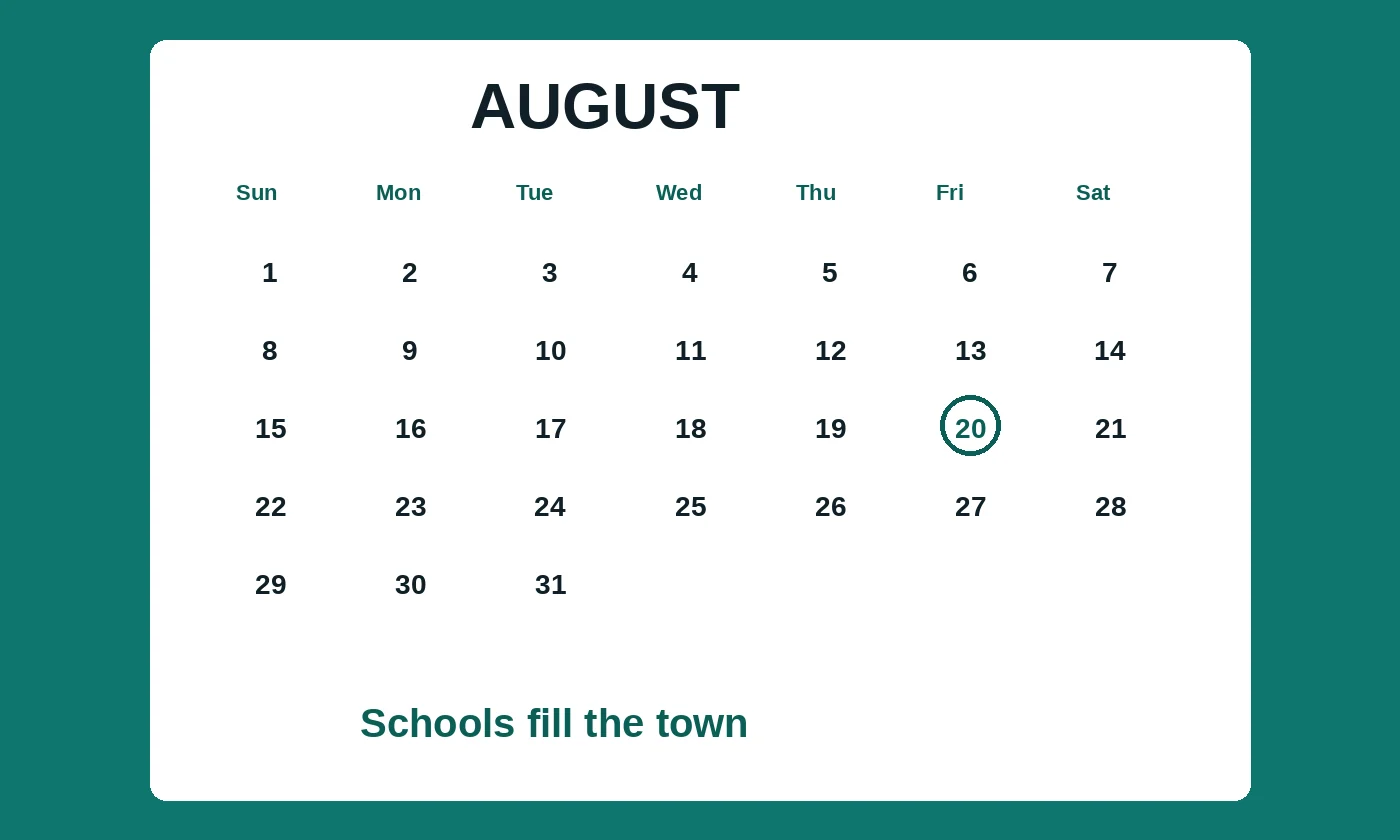
The year the schools make
August and May change the deposits, and we ask which of those months are still open.
Click to see the questions ›Tap to see the questions ›Payroll set up, not run
The provider you already chose keeps running payday, and we place the accounts that catch wages, tax, and the net.
Click to see payroll setup ›Tap to see payroll setup ›
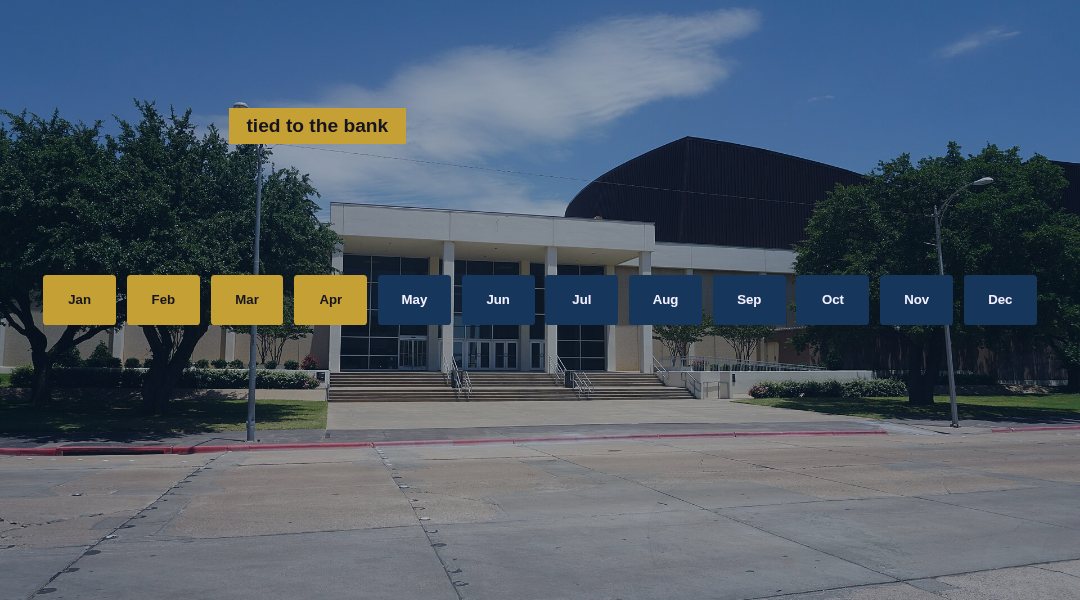
Six months an owner in Abilene actually feels
Open a month.
1January
December sales tax is still open, and last year's uncleared items should not ride into the new file.
We clear those old items with you before the first close of the year is called done.
2March
The franchise report is not due yet, which is when an owner in Abilene can still see which margin path fits the closed months.
We lay the paths next to the books so the middle of May is not the first time you see them.
3May
The Western Heritage Classic fills the Expo Center with a ranch week, and the franchise report is due on 15 May.
We keep that week's deposits in the right month and the report beside the same numbers.
4August
Abilene Christian, Hardin-Simmons, and McMurry fill back up. Friday night at Wildcat Stadium is a picture every Texan can hold, and Monday the deposits still need a category.
We give those deposits the same categories as last August so the jump has an explanation.
5September
The West Texas Fair and Rodeo runs for days at the Expo Center, and a cafe can have its busiest week of the year.
We tie that week to the bank before the next month is allowed to open.
6November
The year is nearly shut, and a choice about equipment or a retirement contribution can still change the return.
We read the closed months with you while that choice is still open.
One practice keeps the monthly file and the year that follows it.
Payday stays on the provider you already use, and the return starts only after those months are shut.
Meet Steven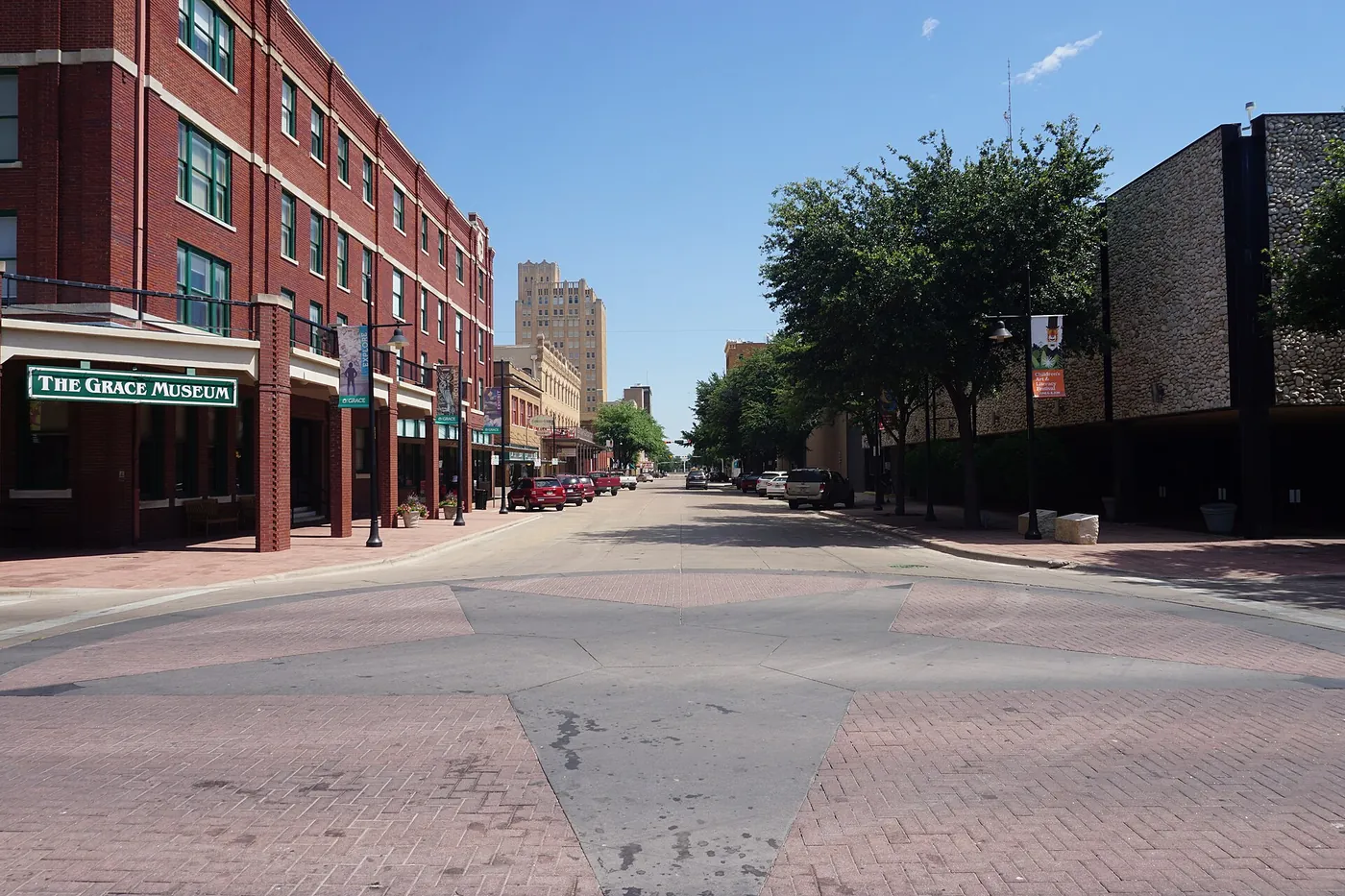
Abilene set storybook figures along the sidewalk downtown. Every Texan can smile at that kind of civic pride. We smile with you, and we still want the month to finish the way a good story finishes.
Shut the months that are loose
The practice is based in Dallas and works with owners in Abilene by video, a shared QuickBooks file, and one close day each month.
You will be talking to the Steven Palmieri practice.
Read the school year in the books
A town that auctioned itself into being beside a new railroad in 1881 had a Baptist college ten years later, a second school in 1906, and a Methodist one in 1923. Hardin-Simmons, Abilene Christian, and McMurry are still in Abilene. You do not have to have sat in a single class to feel what they do to a year.
August fills the streets back up. Restaurants that were quiet in July start taking deposits on a Tuesday morning that looks nothing like June. Landlords see move-in week in the bank before they see it in a conversation. Then late in May the town exhales. Revenue does something an owner can explain, or cannot. The books are how you explain it.
The trouble we see most often is that August arrives while spring is still uncategorized. The busy stretch starts, and last semester's card charges are still waiting for a name. By the time someone sits down, the file has two seasons in it and neither one ties to a statement. We would rather close May before the students leave, and close August while the new term is still young, so each season has its own month.
Abilene Christian says the student body is more than 5,400 people. That is enough to swing rentals, coffee, and the shops that feed a Saturday. We do not need a census to do the work. We need the deposits from move-in week to wear the same categories they wore last year, so the jump is a fact and not a surprise. If a personal transfer landed in the business bank during the rush, we ask what it was before it becomes sales.
Dyess sits southwest of downtown and is the largest employer in the area. Every Texan knows a base town has a rhythm of its own. Months around a rotation do not look like a quiet July. We still close those months on the same day we close a quiet one. The uneven week belongs in the month it happened, not smeared across the quarter so the graph looks calm. A rotation week can put a housing allowance in the same deposits as an ordinary sale, and we split those two before that month is called shut so the quiet month beside it stays comparable.
Read how a month gets closed
A month is closed when the bank, the cards and the loans all agree with the file, and not before. The questions left over are written down instead of being waved through. We start from the statement, not from whatever the software suggested.
Lines that are still waiting for a category stay in that waiting place until a person says what they were. A suggestion is a guess. We do not let a guess become the books just because the week was busy. When a rule is right every time, we keep it. When a rule books the owner's draw as income, we turn the rule off and fix the months it already touched.
Uncleared checks get a look that is longer than a glance. A check from two years ago that never came back should be voided or reissued, and the month it leaves the list is the month the cash becomes real again. We write that void on the reconciliation so the next month does not inherit the same check. Naming that old item while the month is still being closed is kinder than meeting it in the week the return has to leave.
A transfer between two accounts of the same owner moves cash from one account to the other. Booked the wrong way, it shows up twice, once on each side, and the profit is a fiction. We match both sides to the same record before either feed line is accepted. The close is finished when the difference on the reconciliation is zero and the statement date is the date we agreed.
The profit report and the balance sheet wait until the difference on that reconciliation is zero. A profit report printed while the bank is still open is a draft. We mark it as a draft if you need a number for a conversation, and we replace it when the month is actually shut. The relief in this work is ordinary. You know which month you are looking at.
Read what the file look shows
The first step is a look at the QuickBooks file, and it is free. You keep the file. A bank password is not part of the first look. An invite to the file is enough, or a backup if that is how you keep it. We read the open months, the accounts that never get reconciled, and the places where a balance has been plugged so the screen would match.
What you get back is a plain account of the condition. Which months are open. Which accounts tie. Which items have been sitting so long they are no longer a timing difference. What it would take to square the open stretch, in sequence, and what we would leave alone. A file that already ties to the bank gets that verdict in writing, and the look ends there.
Nothing moves during the look. We do not recategorize a year in order to impress you on a call. The scope comes after, in writing, and you approve it before a transaction changes. If the open months are the wrong job for this practice, we say so before anyone pretends otherwise.
Owners write to us when the numbers stopped making sense. Every account used to tie back to a statement, the month used to close, and then it didn't. The look is how we find the month where that stopped. Sometimes it is a feed that doubled a week of deposits. Sometimes it is a loan payment split to the wrong place for a year. The cause is usually boring. Boring is good. Boring can be fixed.
You hear back on the next business day after the note arrives. If that pace is wrong for the week you are in, the calendar is there and the call can be the look. Fifteen minutes is enough to say what the look covers. Nothing is sold at you on that call. The work starts only when the scope and the fee are both written down.
Read how the work reaches Abilene
The books are shared. The call is on video. The close lands on the same day each month whether you are south of the tracks in SoDA or on the other side of the state. You do not drive anywhere to get the month shut.
What you send is ordinary. Statements, the questions you already have, and a note about the week that did not look like the others. What you get back is the closed month, the statements, and a short list of what we need before the next one. The payroll accounts get set up beside a provider you already chose, and that provider keeps running payday. The return is prepared from the months that already closed, not from a file that is still a draft in March. When that return includes a truck, a build-out, or a walk-in cooler, the question is how much life is left and what the book value is now, because the answer changes what you can still decide this year.
On a taxable sale inside Abilene the counter collects 8.25 percent, the city keeps two points, and the state keeps 6.25. Taylor County adds nothing on top of that inside the city limits. If you sell in the city, the return follows that total, and a month with no tax still has a filing rhythm we keep on the calendar. Hotel stays have their own report, 7 percent to the city and 2 percent to the venue district, due even when the month was empty. We do not invent a rate. When the city changes that form, we change the sentence on this page to match.
If you want the look, use the form. Say how current the books are, even if the answer is not sure. We would rather start from a true sentence than from a tidy one. The same close day holds whether the week was a fair week or a quiet one. We write the date of that close in the shared file, and the next month opens from that date. A fair week and a quiet week can share that date, and the difference between them stays visible because neither week was averaged away.